Starting woodworking is exciting, but most beginners waste money on the wrong tools or buy too much too soon. This guide covers the best beginner woodworking tools to start building safely, make accurate cuts, and handle real projects without overspending. The recommendations here focus on tools that are practical, versatile, and worth owning first.
What beginner woodworkers actually need first
Most beginners do not need a huge workshop to start building. What they need are a few dependable tools that cover measuring, cutting, fastening, sanding, and safety. The best beginner setup is one that helps you complete real projects like shelves, benches, planter boxes, simple furniture, and home repairs.
Best beginner woodworking tools
If you are just getting started, focus on tools that are versatile and easy to use. A strong beginner kit includes a cordless drill, circular saw or miter saw, impact driver, tape measure, speed square, clamps, sander, and basic safety gear. You do not need to buy every tool at once. Buy based on the kinds of projects you actually plan to build.
Cordless drill
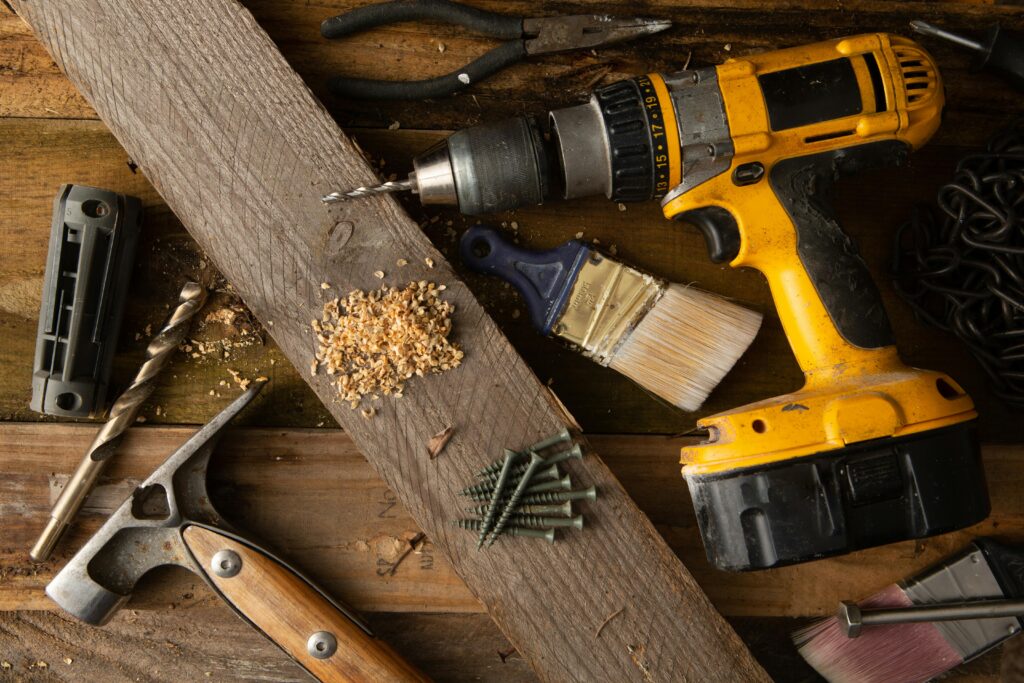
A cordless drill is one of the first tools every beginner should own. You will use it for drilling holes, driving screws, assembling projects, and handling basic repairs around the house. Look for a drill that feels comfortable in your hand, has two speeds, and is part of a battery platform you may want to stay with later.
Circular saw
A circular saw is one of the most useful beginner tools because it can break down plywood, cut framing lumber, and handle many straight cuts. It is usually more affordable than other saws and gives you a lot of versatility early on. If you learn to use a straightedge or guide, a circular saw can do a surprising amount of work.
Miter saw
A miter saw is one of the easiest tools for beginners to get clean, repeatable crosscuts. It is especially helpful for trim, framing, outdoor furniture, shelving, and any project where you need consistent lengths. If your budget allows only one saw at first, the choice between a circular saw and a miter saw should depend on the projects you plan to build most.
Impact driver
An impact driver is excellent for driving long screws and fasteners without struggling the way some drills do. It is not always the first tool a beginner buys, but it quickly becomes a favorite once you start building more often. If you are assembling projects with lots of screws, this tool saves time and frustration.
Measuring and layout tools
Good measuring and layout tools matter more than beginners think. A tape measure, speed square, pencil, and level help you mark accurately and keep projects straight. Better layout usually means better cuts, tighter assembly, and fewer mistakes.
Clamps
Clamps make projects easier to assemble, hold parts in place, and improve accuracy. Many beginners overlook them, but they quickly realize how useful they are once they start gluing, screwing, or trying to keep boards from shifting.
Sander
A random orbital sander helps clean up rough surfaces, ease edges, and improve the final appearance of a project. It is one of the easiest ways to make beginner work look cleaner and more finished.
Safety gear
Safety gear should be part of every beginner setup from day one. At a minimum, use safety glasses, hearing protection, and a dust mask or respirator when needed. Woodworking gets more enjoyable when you feel safe and protected while you work.
How to choose tools without wasting money
Beginners often spend too much by buying tools based on hype instead of actual need. A better approach is to choose tools based on three things: the type of projects you want to build, how often you will use the tool, and whether the tool fits into a battery system or setup you can grow over time. It is usually smarter to buy fewer useful tools than a large pile of cheap tools you outgrow quickly.
My advice for your first tool setup
If I were helping a beginner build a starter setup, I would focus first on tools that get used constantly instead of tools that just look impressive. I would start with:
- a cordless drill and impact driver combo
- a circular saw or miter saw
- a tape measure
- a speed square
- a few clamps
- safety gear
From there, I would add tools based on the projects being built most often.
I believe that selecting a brand you favor and one that has received the best reviews after thorough research is essential. Personally, I lean towards DeWalt, as they frequently offer excellent bundle deals at Home Depot. The crucial factor is ensuring compatibility with your specific needs. From my experience, DeWalt excels in construction and woodworking, while Milwaukee is more suited for plumbing, electrical work, and automotive tasks.
Final thoughts
The best beginner woodworking tools are the ones that help you start building real projects without wasting money, and finding what fits nicely in your hand. Focus on versatility, accuracy, and safety first. You can always expand your collection later, but a smart beginner setup will already be enough to build a lot more than most people expect.